best play by ear piano course Now it's YOUR turn to be the life and soul of the party!. Click Here 👈 playing by ear has be...
 best play by ear piano course
Now it's YOUR turn to be the life and soul of the party!. Click Here 👈
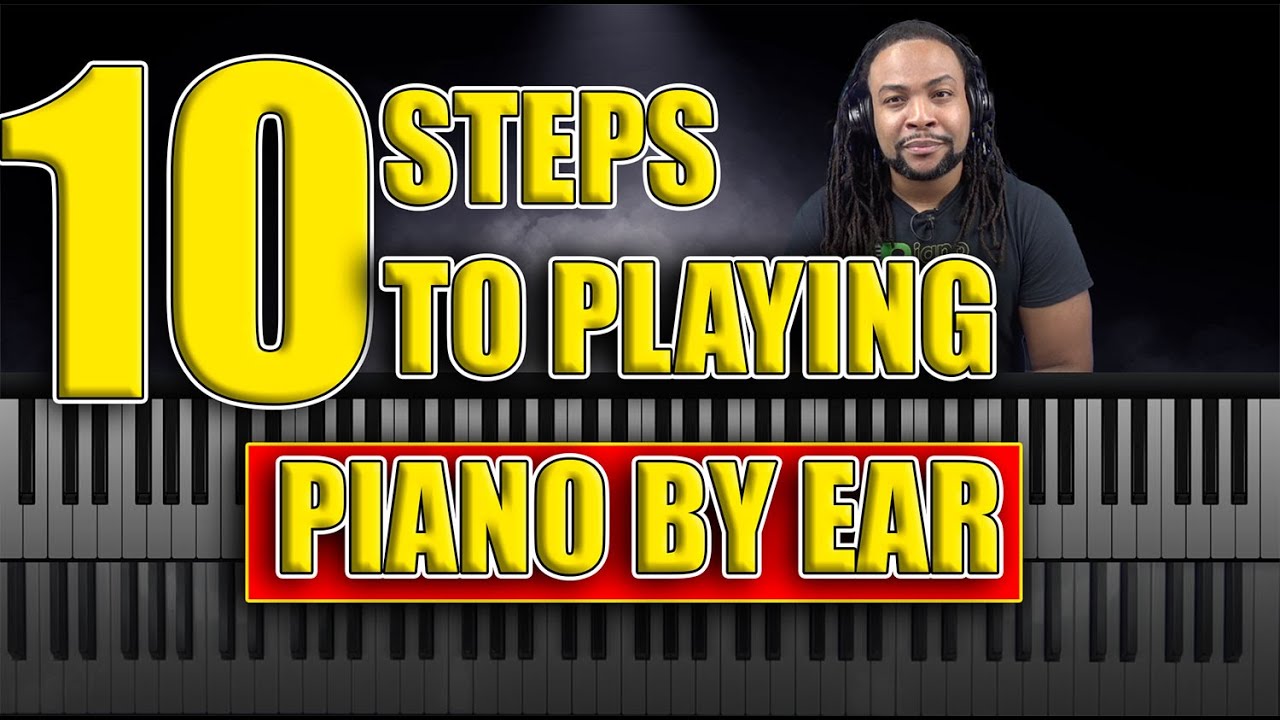
playing by ear has been a mystery for so many people for so many years growing up I was told that you just need to have a good ear or you just need to be born with the skill or you got to be a gifted Prodigy musician to be able to play by ear and all of those are myths for someone who didn't start learning piano until I was in my late teens and then I was able to learn to play by ear I have come to realize that one you don't need to be gifted you don't even need to have a good ear all of that stuff can be learned and so today I want to share with you guys 10 sort of steps 10 tips that you need to be working on actively every day if you desire to play by ear it's not a skill that's just going to fall out of the sky and then next thing you know you're able to sit at a piano and play your favorite songs and also know learning how to play music via sheet and score doesn't help you to be able to play by here so stick around we're going to go through each of those steps one by one and I'm going to give you some some tips as to how to approach each of these and why these tips are important to playing by [Music] ear welcome back my name is Warren mcferon if you're new to the Channel please give us a like and a subscribe so I can continue to provide videos like these on a weekly basis for you now let's jump right into it how does one really learn how to play by year in a sort of a logical format what are the things that we actually need to learn how to do so the first thing I have on my list here is understanding of scales particularly the major scales and the minor scales there are a lot of scales out there but at the fundamental level the two most important scale especially for western music are major scales and minor scales why is that because every song you hear in the radio all your favorite song lives in one of these keys right think about the scales as a house and within the house you got your couch you got your living room you got your kitchen you got your bedroom your dining room all of those individual elements within the house is what we' call the chords The Melodies the progression the licks the runs all of those cool things live within the house and the house is the scale before you can start to understand music via playing by ear you need to understand the scale how it works and it's important because everything needs to live within a scale and so my recommendation is before you can begin to learn to play by ear you need to know all 12 major scales and minor scales you need to be able to look at the keyboard and just see them so if I say hey play me C major scale you need to be able to play me that scale now correct finger Ing and all of that is for a separate discussion now we're just talking about the knowledge you need to know the notes that live within the scale so that's the first thing if you don't know that yet you need to start working on that actively and if you're looking for resources I have a free pdf about uh how you can learn all 12 major scales with a correct fingering and I'm going to link to that down below you can download that step number two to learning piano by ear is you have to learn the theory of how chords are built and spelled right playing by ear predominantly requires us to be able to play chords 95% of what you're going to be doing when you're playing my ear is accompanimental or or or and playing chords behind somebody or playing chords while playing the melody we can't play by ear without understanding how chords work so if I say build me a C major chord you need to be able to say that's a C major chord if I say build me a B flat Min minor chord you need to uh be able to do that and so part of understanding this chord structure is knowing what we call the primary chords and the secondary chords of the major scale for example in the key of C chord one chord four and chord five are primary chords and there are major chords chord two chord three chord six are minor chords and they're secondary chords along with chord seven which is diminish and so part of this uh understanding chord is understanding the relationship each chords hold within the key via the number system so all of this falls under chord Theory and so we have sort of five basic uh Triad chords that every music should know if you desire to play by ear and you need to be able to build these chords at an instant on any key on the piano major chords minor chords diminished chords augmented chords and suspension chords every chord that you hear doesn't matter how complex Jazz chords this that that all of those chords are built on one of these five Triads so if you're sitting here like I don't know any of those things I'm not com I'm not quite sure how to build all these different cords well you need to get cracking on that because that one of the most important steps before we can even sit and start playing our favorite songs we need to understand what those chords are how to build them and then how they function within the major Kei and the minor key and again over at pswi horn.com I have tons of videos that explain each of this in detail so that's step number two learning your chord spelling and building the step number three is to learn how to play common progressions from memory in all 12 Keys especially pop songs most pop songs and even some popular CCM gospel songs are built on what I call the popular progressions and so popular progressions would be like one 6 2 5 right [Music] so that's the 1625 progression and you probably like yeah I've heard that chord progression before and there are a lot of them I call them popular chord progressions we got to get comfortable with those and so in all 12 keys right because playing by ear is not something we just pull out of thin ear there's an element of playing by ear that requires muscle memorization a foundation that we can then build on and part of building that Foundation is through learning in what are the common things it's just like if you're learning a language right if you're learning Spanish or French or German or Japanese or whatever the first thing you're going to learn are the common words within this language how to be able to say excuse me good morning good evening how can I I would like this you know you learn the common phrases that you need to be able to start communicating so it's the same thing with playing by ear you need to learn what are the common chord progressions that you'll come across very frequently in most songs and we need to knock those out I also have a course over at Pian Lon withth warren.com that goes through the six basic chord progressions in all 12 keys and I walk you through that with correct fingerings and all of that so that's tip number three you got to learn your progressions and you got to learn them in all 12 keys from early because we don't want to get locked into just being able to play in one key right that doesn't help anyone tip number four is to learn how to play chords using inversion that's right one of the common Mist mistakes of a beginners is they start right away just learning chords in root position right cuz you learn a cord and you just kind of locked into that nothing is wrong with that right but if you find yourself in that position you want to turn left immediately start learning what it means to play chords and inversions because that's where the magic Lies when you're watching your favorite keyboard player or you're listening to your favorite song that's why they sound the way they sound we're not using root position we're using inversions now what's the purpose of inversion versus root positions in inversions allow you to get to different chords without making too many movements for example if I want to play a C to a minor in root position it would look like this C to a minor you see how this connected that sound because I had to jump that far right but what if I just simply put up my pinky now I'm playing a minor but it's an inversion it's the same notes of a minor right a e and c a e and C every chord can be played in three different positions root position second inversion first inversion and so we have to get comfortable being able to see every chord in three different position so then when you're playing you don't have to go very far to get to the next chord and that's what gives us the sound that you he in recordings [Music] inversion is what allows me to do all of that and this is not something that just now you're learning inversions and it's done it requires practicing right to the point where it becomes almost automatic you don't have to think much about it but it has to be something that is deliberately placed forward in your attempt to learn to play by ear so right out the gate start to learn progressions start to learn inversions and this might be a little bit intimidating your say Warren so many things to learn the thing is we don't learn all of these things at once we learn them over time but you need to learn them in a structured way so it kind of makes sense your brain needs to digest things in structure a manner that makes sense that build on top of each other to avoid overwhelm and that's what panis and forign can do for you all right let's look at now where are we now tip number five you need to learn um how to pitch match now what is that if I were to hide my keyboard and then I play this note on the piano and I say can you go on that keyboard your keyboard and find me this note right what if you can't see the note you're just purely hearing it you need to be able to go on the keyboard and pick out and find this note that's what we call pitch match another way to practice pitch match is to be able to sing back notes that you [Music] [Music] hear there's a little down in my chest [Music] register so you know what I'm saying pitch match playing by ear you need to be able to pitch match because when you hear something in your recording you need to know what note that is not saying you got to sit there and say that's a c because that requires Perfect Pitch whole other set of video for that but you need to be able to then hear that note go and sit in front of your keyboard and find that note pitch matching is a super important part of playing by ear I can't stress the importance of that and for that I have an ear training app called active ear it's for download and in that app we have a level called pitch recognition where you can practice and train yourself to be able to pitch match so if you haven't heard about active ear yet it's available for all Androids and iPhones and so on tablets iPads you can download that and start to work on your ear training right in a logical way let's take a look now at number uh six learn how to identify dionic intervals now this is a combination of being able to pitch match intervals are the building blocks of music if we take again the house the house analogy when we look at a house what we're looking at is hundreds of different blocks depending on where you live hundreds of them that compile together to build a house intervals are like the same thing when we hear a song a beautiful Melody beautiful chord progressions it's hundreds of intervals being woven and stacked and moving together to create that beautiful piece so we need to understand what intervals are because when we understand intervals we can then begin to understand what we're hearing so when I hear something like this I can tell that's a perfect forth that was not something I just grew up learning I had to learn what intervals are the different type of intervals and then eventually learn to be able to identify them by ear and again my active ear app has a level in it that deals with interval recognition and all of that stuff for you to practice but part of being able to play by ear is being able to understand the intervals that you're hearing all right number seven is to learn how to identify basic progression so you see now we're building we're building first you need to be able to pitch match then interval recognition now you need to understand progression and I talk about these things in videos and courses on my website in details so when I'm listening to a song and I hear without touching my keyboard I can tell that's a 1625 it's not a magic trick like I said there are ways to learn this and I've taught hundreds of students how to do this there's a method to be able to sit and listen to a chord progression and tell what it is or if you're not able to tell what it is to be able to to sit and figure it out in no time what chords you're hearing so that's what we call understanding progression by ear right that's part of playing by ear let's take a look now at number nine is to learn The Melody of every song that you play on the piano I've seen a lot of students trying to learn a song and they're saying man it's so hard to learn a course to this song and I said can you sing The Melody of the song Just Just hum it like if I say Amazing Grace I'm most people know Amazing Grace but for example I could just hum that Melody without even giving it much thought but for all the songs that you've attempted to learn can you accurately just hum the melody for those songs The Melody of a song is your guide without knowing the melody intuitively without having it memorized you're going to struggle to be able to play the song to play the chords to the song because that mean you do not know where the song is going you don't have a structur imagine trying to drive cross country without a GPS would you even get to your destination highly doubt it a GPS is your guide to tell you when to turn left when to turn right right knowing The Melody of a song tells you what chords coming next when the chord is changing or when you need to repeat certain chords when certain sections of the song's repeated you cannot accurately play a song If you don't already have that Melody internalized right so you have to learn the melody very well so when I'm learning a new song that I've never heard before I spend just a few days just listening the song you don't necessarily have to learn the lyrics the lyrics is not that important but you need to know the melody so that's the first step for me I have that Melody internalized before I even start thinking about chords tip number nine is to learn and understand song structure this goes back to kind of knowing the melody in western music most songs is divided into we have an introduction then we have a verse then we have a chorus then you may have a repeated verse second verse then you may have a bridge then it goes back to a chorus that's sort of a standard structure of most songs whether gospel or pop songs R&B most songs sort of Follow that structure and that's something you need to understand when you're listening to a song you need to be able to say we're in the verse now we're in the course now we're in the bridge now we're back to a course oh that's a repeated verse oh that's inter interlude right there over at panis withw warn.com I have what is known as transcription Club where I teach people how to recognize songs by ear and one of the big things we do over there is analyzing song structure because not every song is going to follow the same structure but they usually have all of these uh most of these different elements not every song has a bridge not every song has an interlude most songs have a verse and a chorus you got to be able to tell that now why is it important to know the song structure cuz a lot of people especially beginners they look at just individual chords when you start to focus on song structure it helps you to zoom out to see okay so the verse this is what's going on here oh it's just the 1625 and then they throw in a three and a 251 once you can start to compress the song down to sort of like just the core chords what's going on you're able to memorize it quicker right kind of same like how computers work when you can compress files on a computer you can store more files on such computer if you allow the files to be big then you can only store so many files so part of memorization is being able to compress the important details down to their minute Parts into understanding song structure allows us to do that comfortably and lastly tip number 10 if you want to be able to play by ear thing that you need to be able to do is to rely more on memorization and tactile learning for people who've been trained classically or people who learn how to play the piano through notes it's very hard for them to let go off the idea that they need to learn everything through the sheet but I'm telling you right now if you want to learn to play by ear you have to draw a line in the sand where you said I will no longer use the sheet you have to playing by ear requires you to not only do rely more on memorization but through muscle learning where you learn how to move between different chords Through tactile learning and that requires repetition you can't rely on your site now I'm not saying if you read score or if you know how to read music you can't learn by ear cuz I do both and do both very well in fact I learned how to play back ear first then I learned how to read NS both require two different approaches and so if you want to learn by ear you can't continue to rely on the score that's a crutch you have to say I'm going to put away the score and I'm going to learn to play by ear using these tips that Warren just laid out will the process be a lot slower yes it's going to feel like you're going back to training wheels in a bike but you have to I learned by ear first when I go when I started learning how to play by score it was as if I I was learning the piano all over again nothing made sense because I'd gotten so used to just relying on my ear and my tactile ability but eventually I learned how to do both comfortably well I just had to be willing to know that the skill that allows me to play by ear isn't necessarily going to help me to play by notes and as I was learning to play by notes better I realized I couldn't just transfer those skills over to getting better at playing by ear it's two separate path so these are the top skills to learning piano by ear got to learn your scales you got to learn theory of building chords you got to learn uh common chord progressions from memory in all 12 Keys you need to learn to play chords using inversions learn how to pitch match learn how to identify dionic intervals through ear and and learn how to identify basic progressions by ear learn The Melody of every song and learn to understand song structure and lastly rely more on memorization and tactile learning opposed to learning music from the sheets these are 10 important steps that you have to make a part of your daily routine if you want to be able to play by ear comfortably now I've mentioned if you want to get better at ear training and learning how to identify things by ear download my free ear training app active ear and in the description below I'm going to put a bunch of links of free PDFs you can download that helps you with like learning a major scales and learning some basic chord progressions right if you want to learn more about playing by ear in a structured way and learning songs I highly recommend you check out piano lesson withth warren.com we have a great program over there for musicians wanting to play the piano by ear right and check out this video if you want to learn more about some of the steps that we talk about in this video all right so until then keep listening keep singing keep practicing and I'll catch you in the next video bye for now ...


No hay comentarios